Last updated: October 27, 2026
Quick answer: To measure necklace length at home, use a measuring tape or string around your neck, then compare that number with where you want a pendant to sit. The goal is not just to get a number; it is to see where the chain will actually fall on your body, because a 16-inch necklace can look very different on two people.
How to measure necklace length at home before buying a pendant is a simple process, but the fit depends on your neck, the pendant, and the chain style. A 16-inch necklace can sit differently on two people, so the number alone is not enough.
Key takeaways
- Measure at the neck first, then check the drape in a mirror.
- Use a flexible measuring tape if you have one; string can work if you do not.
- Add or subtract a little length based on where you want the pendant to land.
- The clasp and the pendant bail can change the final hang more than people expect.
- A measurement that looks right on paper can still sit too high or too low without a mirror check.
What you need before you measure

You need a flexible measuring tape, a piece of string or ribbon, a mirror, and the pendant you plan to wear if you already own it. A 12-inch ruler helps if you do not have a soft tape, but it is less convenient around the neck.
Lay everything on a table before you start. A measuring tape marked in inches makes the job simpler because necklace lengths are usually sold in inches, not centimeters, in many jewelry listings. If your tape only shows centimeters, that still works; just keep the same unit through the whole process and convert once at the end if needed.
The mirror matters because necklace length is about placement, not only circumference. A chain that measures 18 inches flat can still sit differently depending on your neck, shoulder slope, and the weight of the pendant. If the pendant is already chosen, keep it nearby. Its size and weight affect the drape enough that measuring without it can give a false sense of certainty.
This is the right method for a buyer who wants to avoid guessing on chain placement. It is not the right method if the goal is to match a very specific styling effect from a product photo, because lighting, model height, and neckline all change the look.
For a broader primer on necklace styles and terms, see what is a pendant necklace.
How to measure necklace length at home with a measuring tape
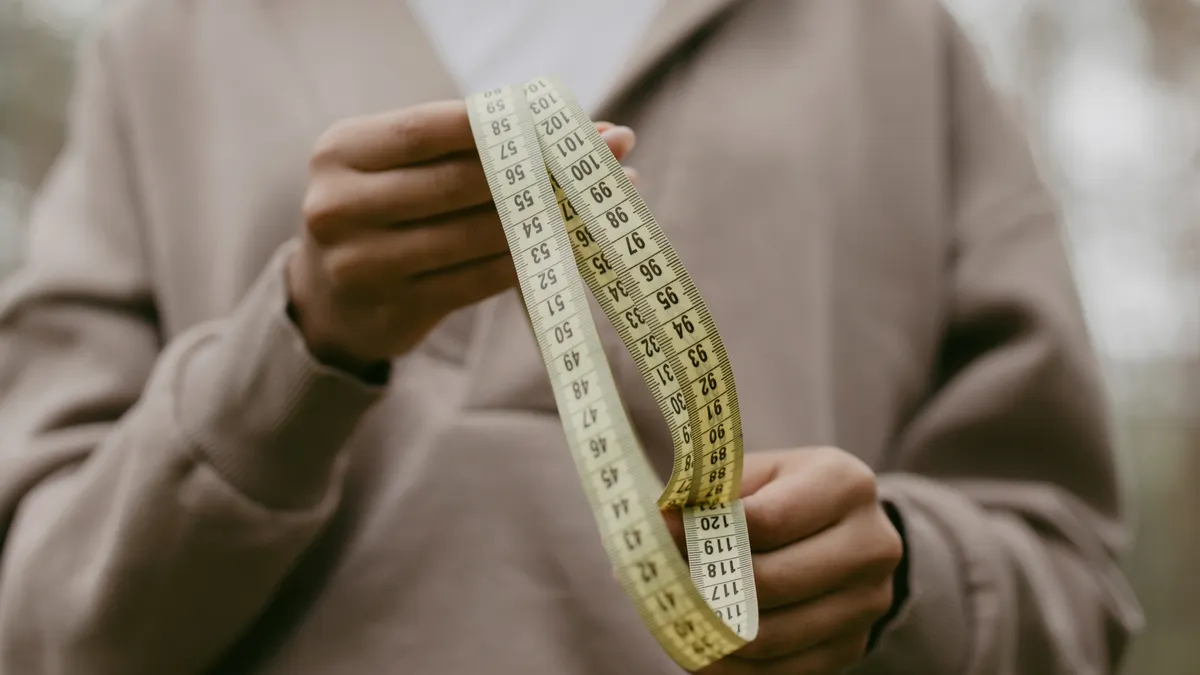
Use a soft measuring tape around the base of your neck, then add the extra length you need for the pendant to hang where you want. This is a direct at-home method if you already know where on the chest you want the chain to sit.
- Stand in front of a mirror and place the tape around your neck where a choker or short chain would rest. Keep the tape flat, not twisted, and snug enough to sit in place without squeezing.
- Read the measurement where the tape meets. That number is your neck base measurement, not your necklace length.
- Add length for fit and drape. For a close fit, add only a small amount; for a looser drop, add more. If you are measuring for a pendant, the pendant itself may make the necklace hang lower once worn.
- Check the number against where you want the pendant to land on your chest. Hold the tape down the front of your body from the neck base to the intended point. If the mark reaches that spot, the measurement is working.
- Repeat after a normal breath and relaxed shoulders. If the measurement changes by about half an inch, use the larger reading for comfort rather than the tighter one.
The result you want is a length that feels right before you buy. If the tape sits comfortably at the neck and the front length reaches the point you pictured, the method worked. If the tape pinches or pulls, the chain will likely feel too short once a clasp and pendant are added.
The main drawback is that a tape alone can encourage a flat, mathematical answer. Necklace fit is not a flat measurement. A pendant necklace can sit higher if the chain is stiff or the clasp is bulky, and it can sit lower if the pendant is heavy. That is why the mirror check belongs in the process, not after it.
How do I measure necklace length with string if I do not have a tape?
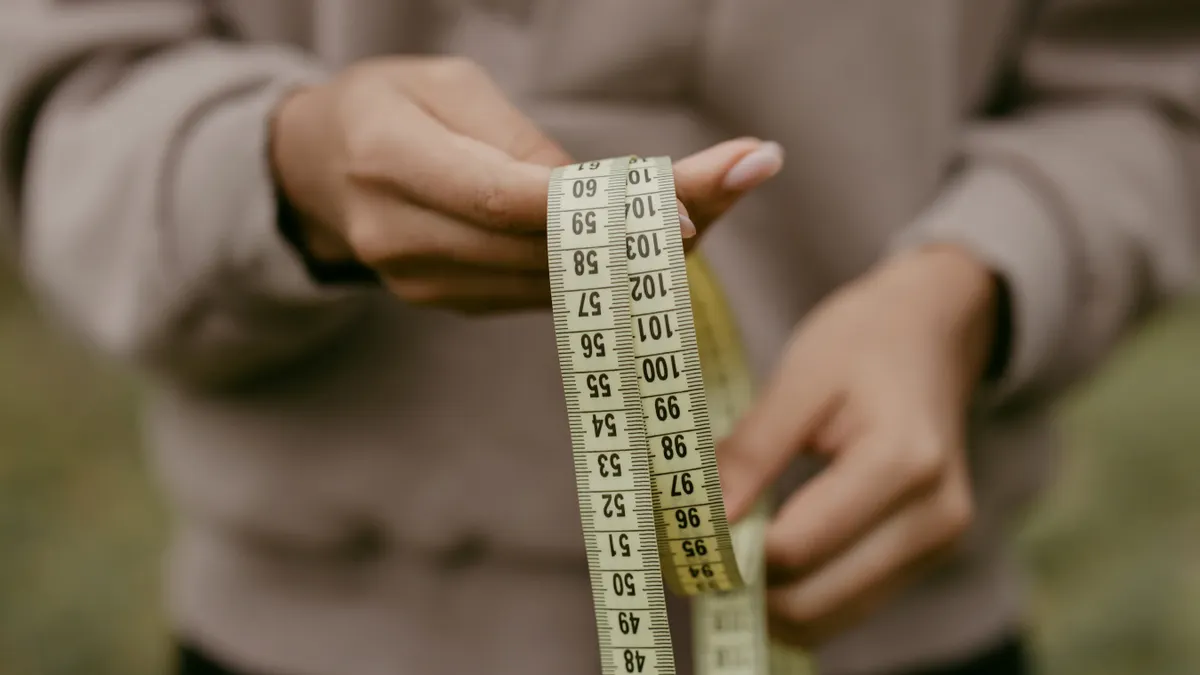
String is a practical backup when you do not have a flexible measuring tape, because it copies the shape of the necklace path around your neck. You then measure the string against a ruler, a hard tape, or a sheet marked in inches.
Cut or use a piece of string at least 24 inches long. Put it around your neck where the chain would rest, keeping it flat and unknotted. Mark the point where the two ends meet with a pen, clip, or a small knot. Do not pull it tight; the string should lie where the chain will actually sit.
Take the string off and lay it flat on a table. Measure from one end to your mark with a ruler. If you are using a 12-inch ruler, move the string along in two passes rather than guessing. That gives you a cleaner result than trying to eyeball the middle. If the string length lands at 16, 18, or 20 inches, you are in the common necklace range, but do not choose the size from the label alone.
This method works well for checking comfort because string conforms to curves better than a rigid ruler. It also helps when you want to compare two possible lengths side by side. Tie a second string 2 inches longer and try both in front of the mirror. The difference is often easier to see than to imagine.
The trade-off is accuracy. String can stretch, fray, or shift while you mark it. A thin cord can also sit a little differently from a finished chain with links and a clasp. If the jewelry will carry a large pendant, allow a little extra room when you translate the string measurement into a chain length.
For chain sizing terminology, the necklace length guide can help you compare common options before you buy.
How to check fit around your neck and where the pendant will sit
Check fit around your neck by simulating the necklace path, then see where the front point lands in the mirror. That is how you can tell whether the pendant will sit at the collarbone, higher, or lower on the chest.
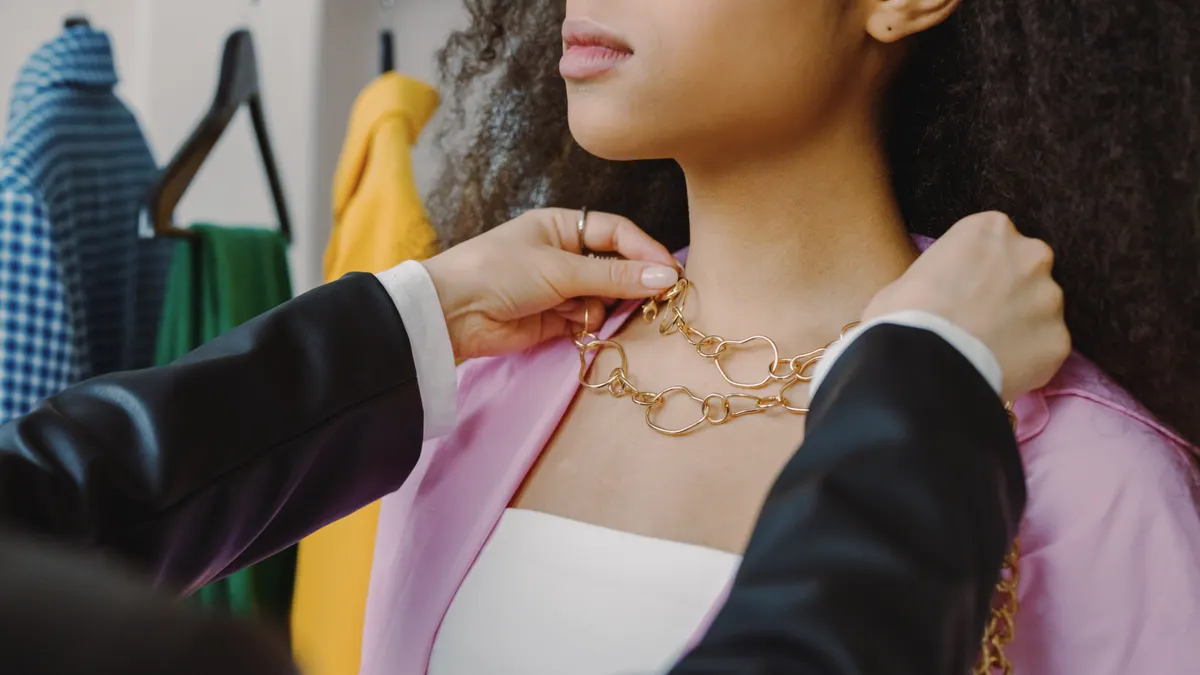
Place the measuring tape or string around the neck and let the front end drop straight down the center of your chest. Use the mirror to see where the lower point lands relative to your collarbone, the top of your sternum, or the neckline of the shirt you plan to wear most often. A 17-inch chain may sit near the collarbone on one person and lower on another, so the visual check matters as much as the number.
If you already have the pendant, hold it at the end of the string before you measure the final length. A pendant that is 1 inch long changes the look more than many buyers expect. It adds visual drop and can make a shorter chain look longer once it hangs. The clasp also matters. A lobster clasp or spring-ring clasp can add a small amount of length and can shift the pendant slightly off-center if the chain design is lightweight.
A simple way to check drape is to pin or hold the string where the clasp would close, then let the pendant hang for 10 to 15 seconds. Watch how it settles. If it swings upward and rests too high, the chain is too short. If it drops below the point you wanted, shorten the measurement before buying.
This section is where many generic guides go wrong: they talk about “inches” as if the number alone answers the question. It does not. Necklace length is a position on the body, not just a label on a product page.
What gets in the way of an accurate necklace length measurement?
The biggest mistakes are measuring too tight, ignoring the pendant weight, and forgetting that clasps and chain style change the final hang. Each one can make a 2-inch difference feel like the wrong purchase.
Measuring too tight is the most common problem. If the tape presses into the skin, the chain will likely feel cramped once you sit, turn, or breathe deeply. Add at least a little ease so the necklace can move naturally. A chain that feels fine standing still can become irritating after an hour if it was measured with no slack.
Ignoring pendant weight is the second problem. A small, light pendant may barely affect the hang. A heavier stone or metal charm can pull the chain lower and change where the center point sits. If your pendant is substantial, test the length with it attached rather than imagining it later.
Forgetting the clasp is a smaller issue, but it still matters. A lobster clasp, spring ring, or extender can change the exact end point and affect symmetry at the back of the neck. This is one reason a necklace measured flat on a table is less helpful than a necklace measured on the body.
Avoid copying an image from a model without checking proportions. The same 18-inch necklace can read differently on a tall person, a short person, or someone with a fuller neck. If you need the necklace to sit at a very specific point, measure your own body instead of relying on the product photo.
For general jewelry care and sizing context, the FTC jewelry guide is a useful reference before you buy.
How to compare your number to a necklace listing before buying
Compare your measurement to the seller’s chain length, then check whether the listing includes the pendant or only the chain. That distinction changes the final result and is easy to miss.
Read the product details for the stated chain length, the pendant drop, and whether the measurement includes the clasp. Some listings measure only the chain body, while others include the full wearable length. If the description is vague, treat the shorter interpretation as the safer one and ask for clarification before buying.
Match your at-home measurement to the actual phrase in the listing. If your string measurement says 17 inches and the chain is sold as 18 inches, expect a little extra room rather than a tight fit. If the pendant is tall, that extra inch may be exactly what keeps it from riding too high.
This is also the place to think about the shirt neckline you wear most often. A chain that works with a crew neck may disappear under a high neckline, while the same length may sit too low on a V-neck. I would not buy by necklace length alone if the pendant is meant to coordinate with a specific collar shape.
For more product terms and jewelry basics, see what is a pendant necklace. If you are comparing lengths across styles, the necklace length guide can help you read listings faster.
Choose the right method for the result you want
Choose the measuring tape method if you want the most direct answer in under 5 minutes. Choose the string method if you want to simulate real drape or you do not have a soft tape.
The tape method is cleaner and faster. The string method is more forgiving when you need to test a few options, especially if you are deciding between two lengths that differ by only 1 or 2 inches. If you wear layered chains, try separate strings for each layer before you buy anything. That gives you a better sense of spacing than a single measurement ever could.
My judgment is simple: measure on your body first, then compare the number to the pendant and clasp you plan to wear. That approach is right for most buyers and wrong only for the rare case where you are matching a fixed, formal dress code or replicating a specific existing necklace exactly. In those cases, measure the existing piece flat and on-body, then compare both numbers.
The point is not to chase a perfect number. The point is to stop guessing. A necklace that is measured at home with a tape, string, and mirror is much less likely to arrive looking shorter or longer than expected.
How do I measure a necklace without a ruler?
Use a string or ribbon first, then compare it to anything with a known length, such as a soft measuring tape, a 12-inch ruler, or a marked sheet of paper. The string method is the closest substitute because it follows the shape around your neck. Mark the spot, then measure the string flat afterward.
Where does a 18-inch necklace fall?
An 18-inch necklace usually falls near the collarbone, but the exact spot depends on neck size, pendant weight, and chain style. On some people it sits high on the chest; on others it drops lower. The safer way to check is to measure around your neck and then hold the length in a mirror before buying.
How do I measure for layered necklaces?
Measure each layer separately with string or a measuring tape, then leave enough space between them for the pendants not to stack together. A difference of about 2 inches between layers is a useful starting point, but the exact spacing depends on the pendants and neckline. Check the drape in a mirror before ordering.
Drafted with AI; not yet reviewed by a person.