Last updated: October 30, 2026
Quick Answer: 3 material families cover most pendant choices. A pendant is a hanging ornament worn on a chain, cord, or ribbon, and in Pendants by Material and Meaning: The Complete Guide, the material changes both how it looks and what it means. In practice, the metal, stone, wood, or glass you choose affects durability, weight, maintenance, price, and the story the piece tells.
If you want the short answer for Pendants by Material and Meaning: The Complete Guide, the “best” pendant material depends on whether you want everyday wear, symbolic meaning, or a piece that marks a life event. A pendant is not just decoration; it is a visible object that sits close to the heart, so material and meaning carry more weight here than they do in most jewelry.
I write about jewelry materials, wearability, and category differences with the same lens I use for other accessory decisions: what lasts, what irritates skin, what reads as formal, and what carries meaning without becoming costume.
Key takeaways
- The material is the message as much as the design; gold reads differently from wood, and stone reads differently from enamel.
- Metal pendants usually work well for daily wear because they are durable and easy to pair, while organic materials work best when symbolism matters more than toughness.
- A meaningful pendant should match the wearer’s habits, skin sensitivity, and the level of formality they actually need.
- The most common mistake is choosing by appearance alone and ignoring weight, chain compatibility, and tarnish.
- If the pendant is meant to mark a milestone, the symbolism should be clear enough that the story survives after the box is gone.
What a pendant really is, and why material matters
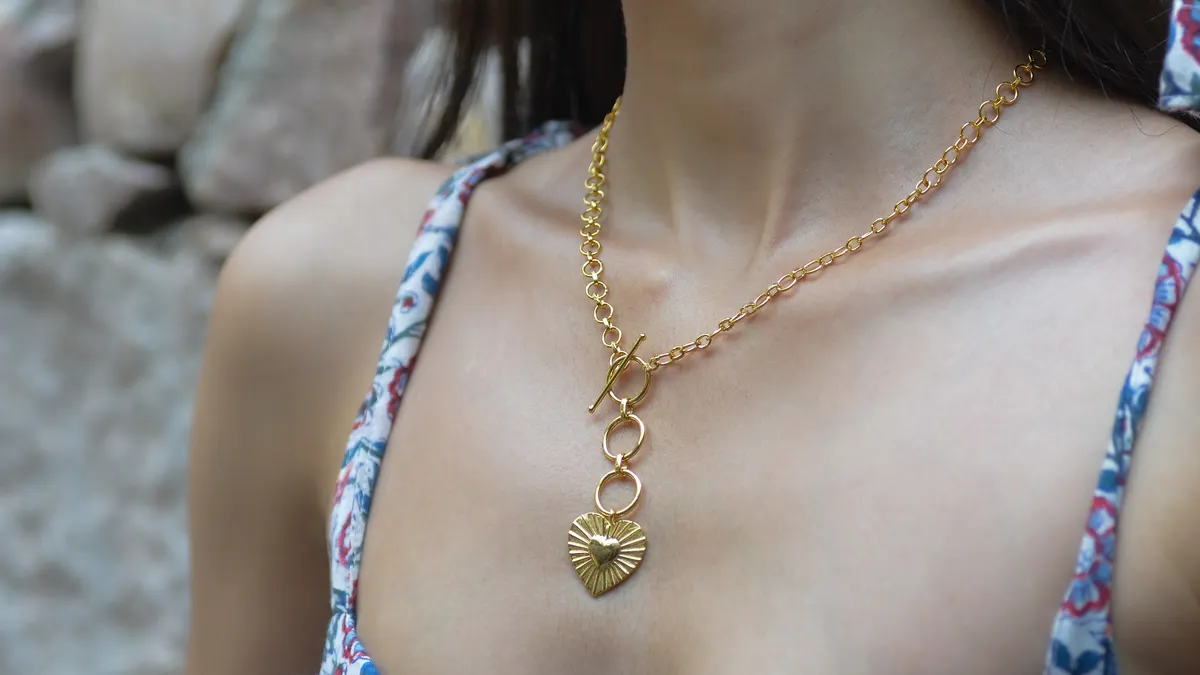
A pendant is a suspended charm or ornament, usually attached to a necklace, and the material determines far more than finish. A 14k gold cross, a sterling silver locket, a jade talisman, and a wooden disc all count as pendants, but they do different jobs in the wardrobe.
Material affects four practical things right away. First is durability: gold and platinum resist corrosion well, while wood, leather, and some plated finishes need more care. Second is weight: a thick sterling silver piece can pull on a fine chain, and a dense stone can sit differently than a hollow metal form. Third is skin contact: nickel-containing alloys can bother sensitive skin, while precious metals and some surgical-grade materials are usually safer choices. Fourth is meaning: materials are never neutral. Gold tends to read as formal, permanent, and ceremonial; silver often reads cooler and quieter; wood can signal earthiness, faith, or handmade craft; stone often signals protection, memory, or identity.
This is where generic articles go wrong. They treat “pendant” as a shape, when the buyer is really choosing a combination of surface, symbolism, and wear pattern, so it helps to consult a jeweler or other professional if the material choice has to balance comfort, symbolism, and daily wear. A pendant that looks right in a photo may be wrong on a shirt collar, too heavy for an everyday chain, or too delicate for a commuter’s routine. That is why material should be the first filter, not the last. See the American Gem Society’s guidance on jewelry materials and the Gemological Institute of America’s notes on gem and metal properties for why those trade-offs matter. American Gem Society, GIA
The most useful way to think about pendants is this: the material should match the reason you are wearing it. A piece meant to survive years of use should not be treated like a one-night statement item, so it is worth consulting a jeweler or other professional if the pendant has to serve both long-term wear and a special occasion. A keepsake meant to carry grief, faith, or protection should not be chosen like a commodity accessory. For care basics, the British Assay Office and GIA both note that different metals and stones need different handling. The Goldsmiths’ Company Assay Office, GIA
Which pendant material is best for everyday wear?
Metal pendants often work well for everyday wear, especially gold, sterling silver, stainless steel, and platinum, because they balance durability with low fuss. If the goal is “put it on and forget about it,” metal is often the simplest starting point.
Gold is the clearest everyday luxury option. It resists tarnish, wears well over time, and still looks composed with plain shirts or formal clothes. The trade-off is obvious: gold costs more than base metals, and higher-karat gold can be softer than lower-karat alloyed gold. A 24k pendant has rich color but scratches more easily than 14k or 18k pieces, so a buyer who wants maximum daily wear often chooses 14k or 18k instead.
Sterling silver is the common middle ground. It has a bright, cool look and suits people who want visible metal without the warmer tone of gold. Its weakness is tarnish: it can darken when exposed to air, moisture, lotions, and sulfur compounds. That is not a defect so much as a maintenance cost. If a wearer likes the look of silver but hates polishing, this is the wrong metal.
Stainless steel wins for hard use. It is sturdy, often less expensive than precious metals, and widely used in simple pendants, dog-tag styles, and minimalist shapes. The downside is aesthetic: it can look utilitarian, and some pieces have a heavier, less refined feel than precious metal. It is a good match for someone who wants a pendant to disappear into daily life, not announce itself.
Platinum is the premium durable choice. It is dense, naturally white, and highly resistant to tarnish. The obvious drawback is cost and weight; many buyers do not need that level of permanence for a pendant, especially if the pendant is small. Platinum makes sense when the piece is a high-value heirloom or a setting for a meaningful stone.
If the pendant is worn most days, the winner is often 14k gold, sterling silver, or stainless steel depending on budget and skin sensitivity. If the wearer expects rough handling, sports, travel, or frequent removal, stainless steel or 14k gold is usually the practical answer. The wrong choice for everyday wear is a delicate plated pendant that depends on a thin finish for its appearance; once the coating wears through, the piece can age badly and quickly.
Gold, silver, and platinum pendants: when does each win?
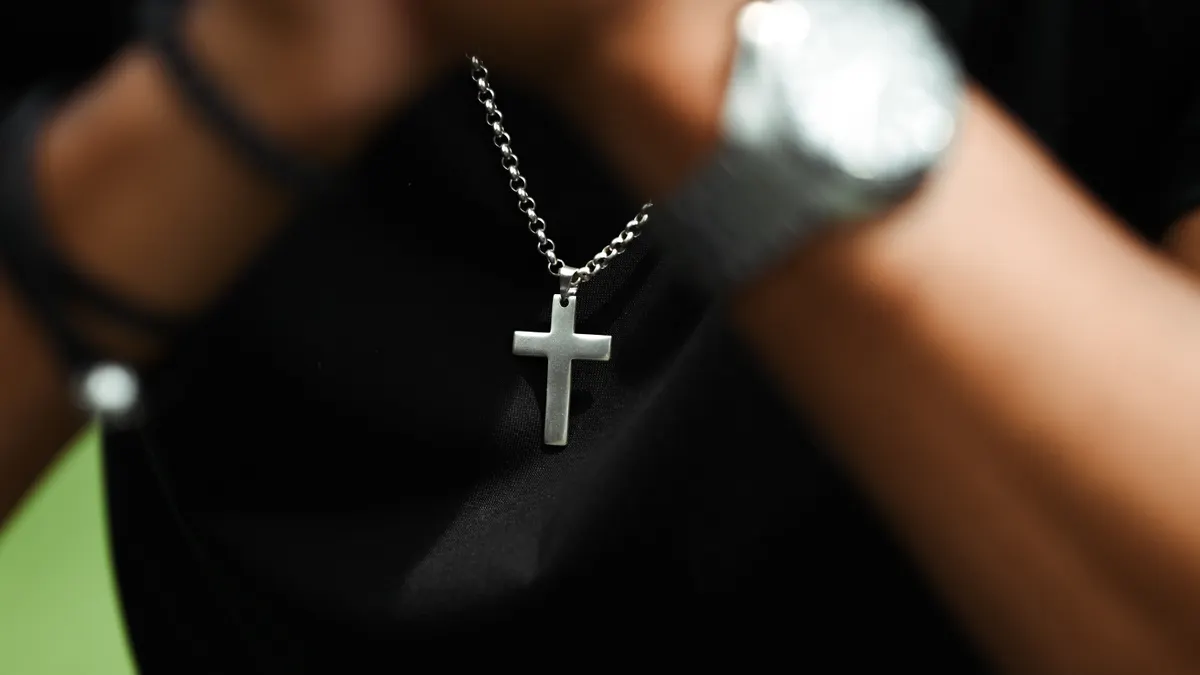
Gold wins when the pendant needs to signal permanence, ceremony, or family continuity. Sterling silver wins when the wearer wants brightness at a lower commitment. Platinum wins when the piece must hold up as a long-term heirloom and the buyer is comfortable paying for density and rarity.
Gold’s strength is meaning as much as material. In many cultures, gold carries ideas of prosperity, blessing, love, and status. It pairs naturally with religious pendants, milestone gifts, and pieces intended to be passed down. Because gold does not tarnish in the way silver does, it also has a practical advantage: the visual message stays stable. The weakness is that a gold pendant can look too formal for someone who dresses casually every day, and very high-karat gold can be too soft for hard wear.
Sterling silver is the most versatile of the three for buyers who want an approachable, understated look. It suits modern, minimalist, and spiritual pendants well. The trade-off is maintenance. Tarnish is manageable, but it is real, and a buyer who dislikes polishing may end up wearing the piece less. Silver is also easy to undercut with lower-quality plated lookalikes, so craftsmanship matters. A solid sterling pendant is not the same as a silver-colored pendant.
Platinum is the specialist’s choice. It reads clean and restrained, and it is excellent for settings that need grip and long service life. Its downside is that many pendant designs do not need platinum’s strengths; the buyer pays for a feature set that may matter more in rings than in hanging jewelry. Platinum is the wrong choice if the main goal is visual warmth or an intentionally traditional gold look.
Here is the most honest version: gold is often best for status and symbolism, silver is often best for flexibility and accessibility, and platinum is often best for the buyer who wants durability without flash. The material should match the emotional register of the pendant. A memorial pendant in gold feels different from the same form in silver, and neither is interchangeable if the wearer cares about what the piece says before anyone asks.
The Honest Side-by-Side
The material choice changes the decision in ways that are easy to miss at a glance. The table below compares the options on the factors that actually affect buying and wearing.
| Criteria | Gold | Sterling Silver | Winner for condition |
|---|---|---|---|
| Everyday durability | Strong, especially at 14k–18k | Good, but tarnishes | Gold for low-maintenance wear |
| Visual warmth | Warm, traditional, ceremonial | Cool, understated | Gold for formal or classic style |
| Maintenance | Low | Moderate; polishing needed | Gold for convenience |
| Affordability | Higher | Usually lower | Silver for budget-conscious buyers |
| Symbolic tone | Prosperity, permanence, ceremony | Clarity, calm, simplicity | Depends on message |
| Skin sensitivity | Good if alloy quality is reliable | Usually good in solid sterling | Tie, with quality control |
| Heirloom feel | Very strong | Strong, but less formal | Gold for legacy gifts |
| Pairs with religious motifs | Excellent | Excellent | Depends on tradition |
| Risk of visible wear over time | Low | Higher because of tarnish | Gold for set-and-forget wear |
The table makes the trade-off plain: gold is often the better default if the pendant is meant to be worn often and handled without much thought, while silver is often the better default if the wearer values lighter cost and a cooler look. What gets omitted from many buying guides is the consequence of those differences. Tarnish means effort. Higher-karat softness means scratches. A pendant is small, but its upkeep can still decide whether it stays in rotation.
The right choice also depends on the chain. A substantial gold pendant on a flimsy chain looks mismatched, and a heavier sterling piece on a very fine chain can drag the necklace out of alignment. The material choice is never isolated from the rest of the build. A buyer who wants a pendant to lie flat, stay centered, and age gracefully should think of chain and pendant as one system.
What do stone pendants mean, and when are they worth choosing?
Stone pendants are worth choosing when the meaning of the material matters as much as the shape. They often communicate protection, healing, memory, birth, or identity, and they do that more directly than plain metal.
Jade, onyx, quartz, turquoise, lapis lazuli, pearl, amber, and similar materials each carry established symbolic associations in different traditions. Jade is often tied to luck, protection, and longevity. Onyx tends to read as grounding and protective. Quartz is commonly linked with clarity or amplification in spiritual contexts. Turquoise appears in many cultures as a protective and sacred stone. Pearl reads as softness, purity, and refinement, while amber often carries ideas of warmth and ancient life.
The strength of stone pendants is that they look and feel intentional. A small stone cabochon or carved amulet often tells a story faster than a plain charm. That makes stone useful for gifts tied to a birth month, a cultural tradition, or a spiritual practice. It also works well for buyers who want the pendant to feel less like fashion and more like an object with a history.
The drawback is fragility. Many stones can chip, crack, or scratch more easily than metal. Some are porous and can react badly to lotions, perfumes, or water, so it helps to consult a jeweler or other professional before choosing one for frequent wear. Others are softer and need careful setting. If the pendant will be worn during workouts, travel, manual work, or frequent layering, the owner should be honest about how much care they are willing to give it.
Stone pendants are not the best choice for someone who wants a piece to forget about in a drawer and pull out only once a year, although they can be very effective if the wearer wants a visible, intentional object with a specific meaning. They work best when the wearer intends to keep the pendant visible and meaningful. They also work best when the setting protects the stone. A well-made bezel setting is often better for daily use than an exposed, high-prong setting, because it shields edges from knocks.
The wrong buyer for stone is the person who wants a durable, low-maintenance object with no symbolism attached. The right buyer is someone choosing a material because the material itself says something: protection, ancestry, ritual, memory, or identity. In that case, stone is not an accessory choice; it is the point.
When wood, pearl, enamel, or leather make more sense
Nonmetal materials make sense when the pendant is supposed to feel personal, handmade, or culturally specific rather than simply precious. Wood, pearl, enamel, and leather each create a different kind of meaning.
Wood is the strongest choice for natural, earthy, or craft-centered pendants. It can feel warm, tactile, and intimate. It is especially useful in spiritual pieces, carved symbols, or handmade gifts. The weakness is obvious: wood does not like prolonged moisture, rough handling, or harsh chemicals. A wooden pendant is a poor choice for someone who wants a piece that survives constant exposure to sweat, rain, or perfume.
Pearl sits in a different category. It is not metal, stone, or wood; it is organic and visually delicate. Pearl pendants read as classic, refined, and soft. They suit formal clothing, bridal wear, and heirloom settings. The downside is sensitivity. Pearls can be scratched and can react to acids, so they need careful storage and cleaning. They are not ideal for hard daily wear, especially if the wearer tends to toss jewelry into a bag or leave it near cosmetics.
Enamel is useful when color is part of the message. It can make a pendant playful, graphic, or symbolic without relying on gemstone color. It is common in enamel charms, miniature icon pendants, and pieces that want a flat, polished surface. The drawback is chipping. Once enamel is damaged, repair can be difficult. For someone who wants crisp color and accepts a little fragility, enamel is excellent. For someone who needs resilience, it is a compromise.
Leather and cord-based pendants are about texture and ease more than longevity. They read casual, artistic, or rustic. They are common in talismanic designs, surfer styles, and handmade pieces. The trade-off is wear: leather can dry out, darken, and weaken over time. It also changes the level of formality immediately. A pendant on leather will never read like the same pendant on gold chain.
These materials are wrong for the buyer who wants a one-pendant wardrobe solution. They are right for the buyer who wants the pendant’s surface, texture, and origin story to matter more than permanence. That is the key distinction. Some materials are chosen because they last. Others are chosen because they feel like the wearer’s life, faith, or aesthetic.
What a pendant means depends on shape, not just material
A pendant’s meaning comes from the interaction of material, shape, and cultural context. A cross in gold carries a different tone than a cross in olive wood. A heart in sterling silver reads differently from a heart in black enamel. A locket in gold suggests permanence and keepsake value; the same locket in silver suggests quiet intimacy. The material changes the story before the shape even starts speaking.
This is why a generic “meaning of jewelry” article often misses the real issue. Buyers do not just ask what a symbol means in the abstract. They ask what it means when made from a particular material. A moon pendant in brass may feel bohemian or vintage; a moon pendant in platinum may feel sleek and restrained; a moon pendant in mother-of-pearl may feel soft and feminine. The symbol stays the same, but the material shifts the emotional register.
A few recurring associations are worth knowing. Gold often signals celebration, success, devotion, or ceremony. Silver often signals calm, moon imagery, clarity, or understatement. Black materials such as onyx, obsidian, or dark enamel often signal protection, sobriety, or strength. Clear stones and glass can suggest clarity, purity, or openness. Natural materials such as wood, bone, shell, or leather often signal ancestry, nature, craft, or spirituality. None of these meanings are universal, which is the point. Meaning is partly shared and partly personal.
If the pendant is a gift, ask what the recipient already wears. A person who owns only gold jewelry will often read silver as a different style universe, even if the symbol is perfect. A person who prefers natural textures may value a wood or stone pendant far more than a polished metal one. Material is part of the message, not packaging around it.
The most honest rule is simple: choose the material that supports the meaning you want the pendant to keep over time. If the story should feel formal and enduring, choose a stable metal. If the story should feel personal or spiritual, choose a material with a visible character of its own. If the story should feel casual and wearable, do not overcomplicate it.
Which pendant material should you choose for a gift?
Gold or sterling silver are often the safest gift choices, because they fit a wide range of wardrobes and are easy to understand as keepsakes. If the gift is meant to mark a baptism, graduation, anniversary, or family milestone, metal usually lands better than a highly specialized material.
Gold is often the stronger gift when the event is ceremonial or the piece is meant to last across decades. It has the strongest “keepsake” signal and usually needs less explanation. Silver is often the stronger gift when the style is uncertain or the buyer wants a more accessible choice that still feels special. Both work well with initials, religious symbols, lockets, and simple medallions.
Stone is the better gift when the meaning is personal and specific. Birthstones, protective stones, and culturally significant stones make sense when the recipient already understands or values that symbolism. The drawback is that stone gifts can miss if the symbolic system is unfamiliar to the wearer. A stone that means one thing in one tradition can feel decorative or arbitrary in another.
Wood, enamel, and leather are more selective gift choices. They work when the recipient already likes handmade, artistic, or natural-looking objects. They are weaker as “safe” gifts because they can feel too casual or too style-specific. If the relationship calls for a timeless gift, these materials usually need a stronger rationale than metal does.
If the pendant is for a child, the practical answer often shifts toward lighter, simpler, and more durable forms. For an adult who wears jewelry often, the better gift is usually the one that matches existing habits. A pendant should not force a new wardrobe. That is where gift-givers go wrong: they choose meaning that looks good in a case, then ignore how the recipient actually dresses.
When you should skip a pendant entirely
Skip the pendant if the wearer dislikes necklaces, works in settings where chains catch, or has no patience for maintenance. A pendant is the wrong gift if the likely result is that it stays in a box.
The clearest disqualifier is comfort. Some people simply do not like anything hanging at the neck. Others cannot wear necklaces because of uniform rules, safety concerns, or personal preference. In those cases, a pendant is a decorative mistake, not a thoughtful one.
Another reason to skip is structural. If the pendant is large, very heavy, or unusually sharp-edged, it can become annoying fast. A piece that looks striking in a display case may spin, tilt, or pull on clothing. That is especially true with oversized stone pendants, thick medallions, or sharply geometric designs. The problem is not the material alone; it is the combination of material and form.
A third reason is skin and upkeep. If the buyer knows they will not polish silver, store pearls carefully, or dry wood after exposure, those materials become a burden. The same is true for plating. A plated pendant can be fine for occasional wear, but it is a poor choice when the owner wants a long-life object with minimal attention.
There is also a social reason to skip. If the pendant is meant to communicate belief, ancestry, or identity, but the wearer would rather not make that statement publicly, the object may create discomfort. Meaningful jewelry is only meaningful if the wearer wants to carry that meaning in public. Not every symbol belongs on every body.
If those constraints matter, the best alternative is often a ring, bracelet, brooch, or small charm that does not sit at the throat. Not every meaningful object has to be a pendant.
The verdict: which pendant material to choose and why
Choose gold if the pendant is a daily-wear keepsake, a ceremonial gift, or an heirloom that should look stable for years. Choose sterling silver if the wearer wants a cooler look, more accessible cost, and a material that still feels substantial. Neither if the wearer dislikes necklace weight, needs zero maintenance, or wants a piece that can survive hard use without care; in that case, the pendant category itself is the wrong fit.
Choose stone if the pendant’s meaning depends on symbolism, ritual, or personal identity more than on easy maintenance. Choose wood, pearl, enamel, or leather if the desired effect is handmade, natural, or stylistically specific rather than purely durable. Choose platinum only when the pendant is a high-value heirloom or setting where permanence matters enough to justify the premium.
That is the plain answer. The best pendant material is not the rarest one, the shiniest one, or the most expensive one. It is the one that matches how the pendant will be worn and what it is supposed to mean after the first week of ownership. If the material and the meaning agree, the pendant will stay in rotation. If they fight each other, the piece will become costume, clutter, or a box-kept regret.
Questions people ask before they buy
What pendant material is best for sensitive skin?
Solid gold, platinum, and well-made sterling silver are usually the safest starting points, while low-quality plated metals are the first thing to avoid. The real issue is often alloy content, especially nickel, so a buyer with known sensitivities should check the metal specification and ask a clinician if reactions have been a problem before.
Do pendant materials change the meaning of the symbol?
Yes, the material changes the tone of the symbol even when the shape stays the same. A cross, heart, moon, or locket can read formal, casual, spiritual, or modern depending on whether it is made from gold, silver, wood, stone, or enamel.
Is sterling silver better than silver-plated for a pendant?
Yes, sterling silver is usually the better long-term choice because it is a solid precious alloy rather than a surface coating. Silver-plated pieces can wear through, revealing the base metal underneath, which changes both appearance and lifespan.
What is the best pendant material for everyday wear?
Gold, sterling silver, or stainless steel are the most practical everyday options because they balance appearance with durability. The best of those three depends on whether the wearer prioritizes low maintenance, lower cost, or a more traditional look.
Drafted with AI; not yet reviewed by a person.