Last updated: October 30, 2026
Quick answer
The most wearable choice for many people is a compact solitaire or minimal pendant on the right chain, usually in the 16- to 20-inch range. For this guide to Necklace Pendants and Pendant Styles: The Complete Guide, the right style depends on where the necklace will sit—collarbone, sternum, or below—plus the chain weight, neckline, and how much attention you want the piece to attract.
A necklace pendant is the part that does the visual work: it sets the mood, controls the scale, and often decides whether a chain looks intentional or awkward. If the question is “Which pendant style should I choose?”, the answer depends on your neckline, chain weight, and how much attention you want the pendant to attract.
Pendants are not all interchangeable. A small bail, a heavy stone, a long drop, and a charm-style cluster each hang differently, catch light differently, and sit differently on the body. A piece that looks elegant in a display case can feel fussy, tippy, or too short once it’s on a chain.
I write about jewelry structure, materials, and wearability with an eye on the details that change how a piece actually sits and lasts.
Key takeaways
- Pendant choice is mostly about proportion, not taste alone.
- The bail and chain matter as much as the pendant itself.
- Light pendants suit delicate chains; heavy pendants need stronger support.
- Short pendants read neat and classic; long drops feel more dramatic.
- A pendant can be wrong for a neckline even if it is beautiful on its own.
- The right style depends on where the necklace will sit: collarbone, sternum, or below.
What makes a pendant a pendant?
A pendant is a suspended ornament, not just any object on a chain. The defining feature is the hang point: a bail, loop, ring, or fixed connector that lets the piece move freely or semi-freely below the chain. That small structural choice changes everything, including comfort, swing, and how the pendant lands against clothing.
The cleanest way to think about pendant styles is by how they hang and how much of the chain they occupy. A 12 mm solitaire pendant on an 18-inch chain gives a very different impression from a 45 mm tassel drop or a chunky medallion. The first reads restrained; the second reads deliberate and often dressier; the third can become the whole outfit.
The mistake most generic guides make is treating “pendant” like one category with a single aesthetic. In practice, pendant styles fall along several useful axes: fixed versus mobile, single-stone versus shaped design, short versus long drop, and light versus substantial weight. Those differences matter more than whether the metal is yellow, white, or rose, and if you are unsure which features matter most, it helps to consult a qualified jeweler or another jewelry professional. For a broader reference point on jewelry terminology and construction, trade guidance from the Gemological Institute of America is a useful starting place.
If the buyer’s real question is “What will look good on me?”, the answer starts with neck position and scale. A pendant that lands exactly at the collarbone usually looks crisp on open necklines. One that drops 2 to 3 inches lower creates vertical line and often flatters higher necklines. A piece that hangs too low can disconnect from the outfit unless it is meant to be a statement.
Which pendant style fits the chain and neckline?
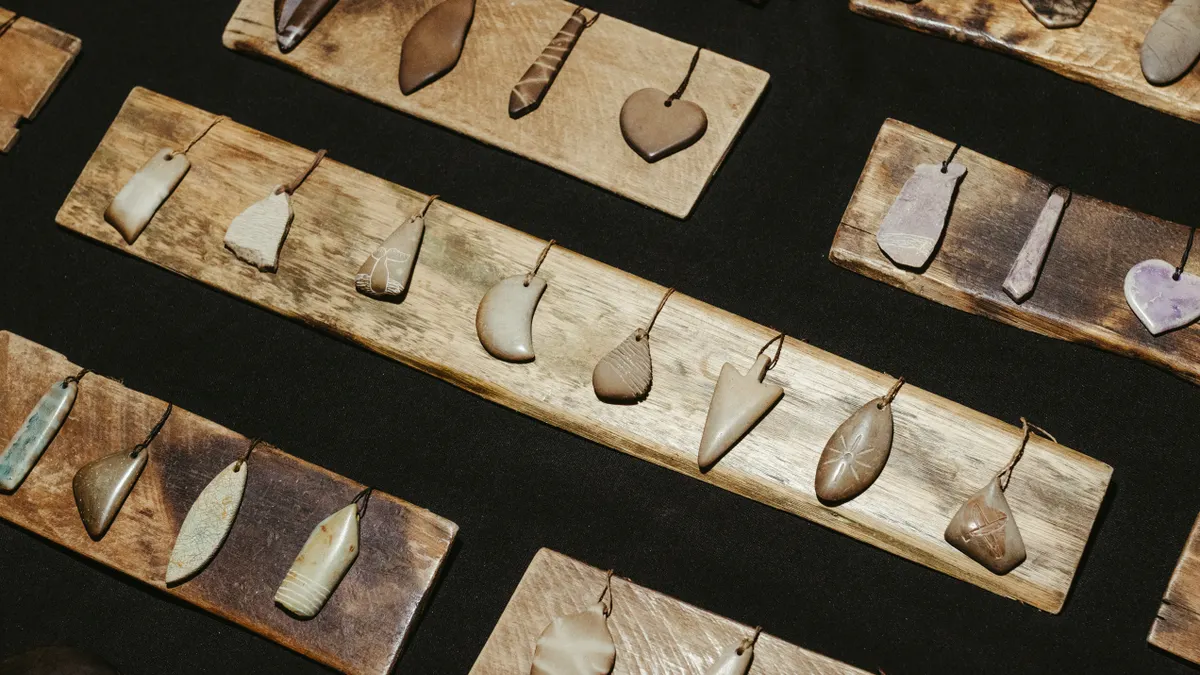
The right pendant style fits the chain first and the neckline second. That order matters because a pendant that works with the wrong chain often looks clumsy, while a well-matched chain can save a simple design.
A pendant with a narrow bail or integrated loop usually hangs best on a fine cable chain, box chain, or curb chain with modest thickness. Heavier pendants often need a stronger chain such as a thicker curb, rope, or Singapore chain so the necklace does not sag at the clasp or twist forward. The chain does not need to overpower the pendant, but it does need enough tensile strength and visual weight to support it.
Neckline changes the equation. V-necks pair naturally with drops and pointed shapes because the pendant echoes the line of the garment. Scoop necks work with round medallions, hearts, discs, and small clusters because the shape sits inside the opening instead of fighting it. Turtlenecks and high collars can handle longer pendants, especially those that land below the chest, because a short pendant gets trapped visually at the neck. Boat necks are trickier; they often need a pendant with a slightly longer drop to avoid looking cramped.
A plain solitaire pendant is often a practical choice if you want one necklace that works across several outfits. A geometric pendant or long drop is more specific. That is not a flaw; it is a design decision. The more stylized the pendant, the more it asks of the neckline.
The drawback of “one size fits all” thinking is that it pushes buyers toward a pendant that is visually harmless but not especially strong. A tiny charm on a fine chain can be elegant, yet it may disappear on patterned clothing or in low light. A larger pendant solves that, but then it becomes less versatile and more likely to dominate.
The real difference between solitaire, charm, medallion, and drop pendants
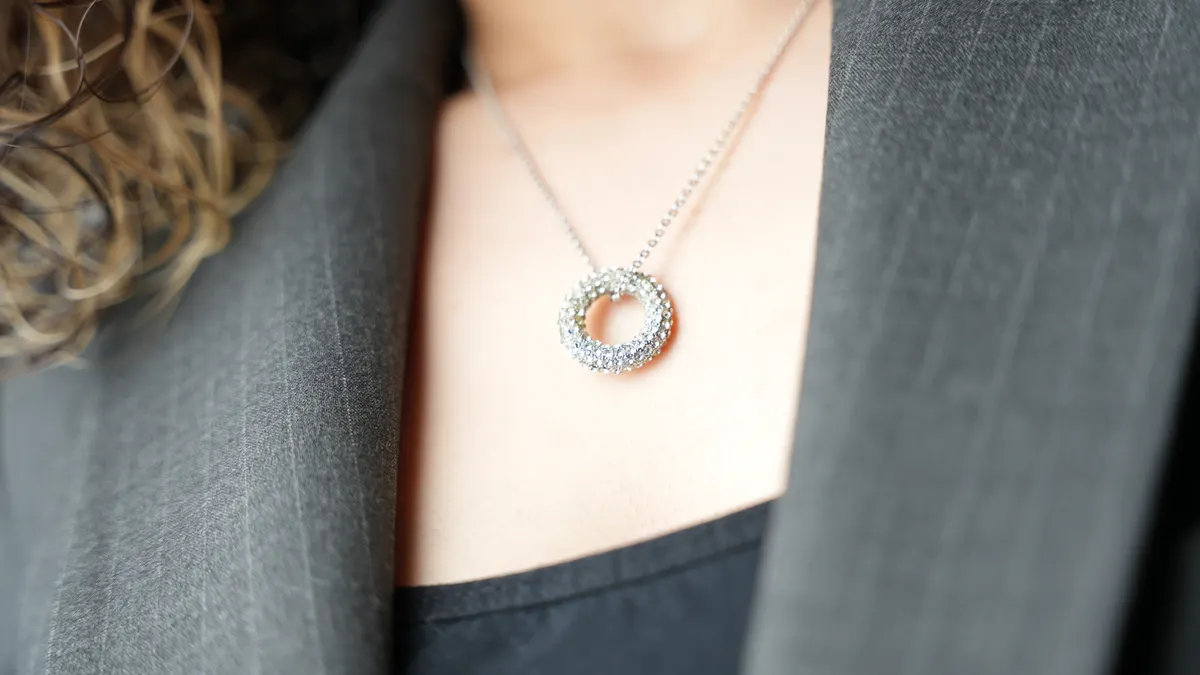
Solitaire pendants are common for everyday wear because they are adaptable. A single stone, pearl, or bezel-set gem typically looks balanced on its own, and the small footprint makes it easier to wear with shirts, knitwear, and layered necklaces. A solitaire can be a quiet choice across many outfits.
Charm pendants work when personality matters more than symmetry. These are the pieces that can include initials, symbols, tiny objects, or small clusters of meaningful shapes. They are often lighter than they look and easy to layer. The weakness is obvious: charm pendants can drift toward sentimental clutter if the design is busy or if multiple charms clink together on a short chain.
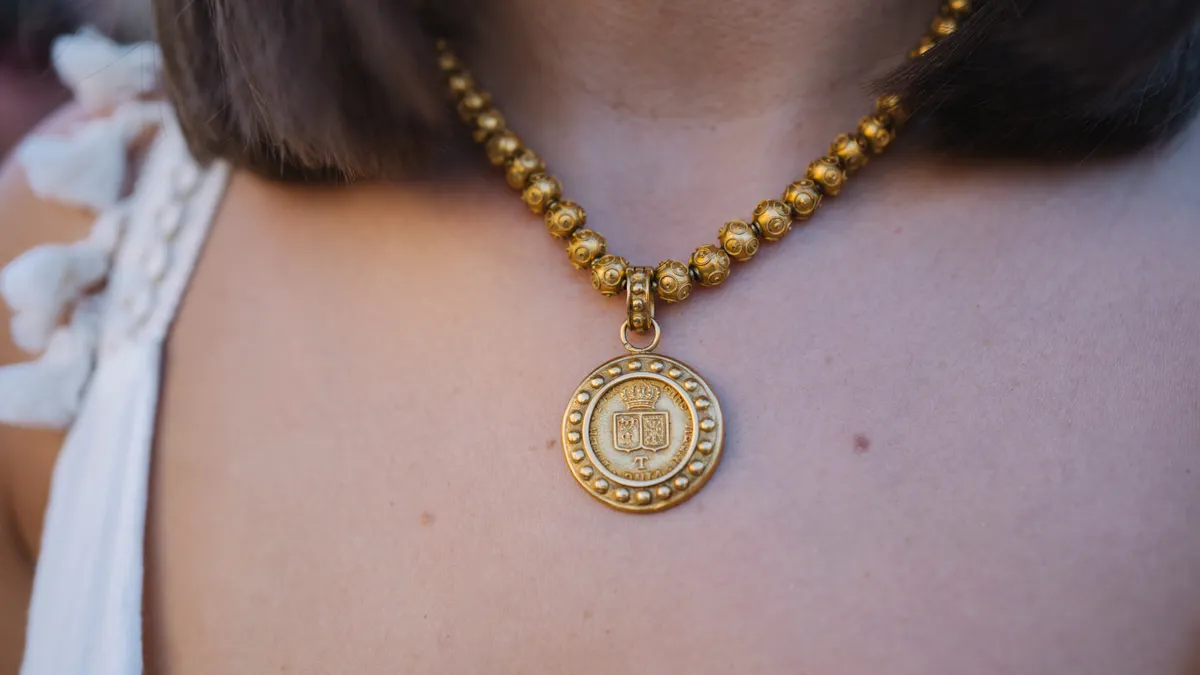
Medallions are for presence. A medallion usually has a broader face and more visible surface area, so it reads from farther away and often anchors the center of the neckline. The trade-off is weight and stiffness. Large medallions can pull chain links into a visible curve, and if the bail is too small, the pendant may not lie flat.
Drop pendants work for elongation. These are the pendants that hang vertically, often with a stone or element suspended below the main anchor. They lengthen the line of the neck and can make a simple top look more considered. The weakness is motion: if the drop is too long or the components are loosely connected, it can swing, flip, or catch on fabric.
The style that gets misunderstood most often is the medallion. People sometimes assume it is automatically formal. It is not. A thin, stamped medallion can look bohemian or everyday; a thick, engraved one can look ceremonial. The deciding factor is usually thickness and finish, not just shape.
The honest side-by-side
The practical way to compare pendant styles is to look at the factors that actually change the result: hang, scale, versatility, maintenance, and compatibility with the chain and neckline. The table below is the practical version, not the marketing version.
| Criteria | Solitaire pendant | Drop or medallion pendant | Winner for this condition |
|---|---|---|---|
| Everyday versatility | Clean with most outfits and necklines | More specific; can feel dressy or directional | Solitaire, for daily wear |
| Visual presence | Subtle unless the stone is large | Stronger from a distance | Drop or medallion, for statement wear |
| Chain compatibility | Works with lighter chains and finer bails | Needs sturdier support and better balance | Solitaire, for delicate chains |
| Neck elongation | Mild vertical effect | Strong vertical line | Drop pendant, for lengthening the look |
| Layering | Easy to layer because it stays compact | Harder to layer cleanly unless slim | Solitaire, for layered stacks |
| Fabric friendliness | Less likely to catch | More likely to snag knitwear or collars | Solitaire, for soft fabrics |
| Maintenance | Fewer edges, simpler cleaning | More crevices, more flipping or tangling risk | Solitaire, for low upkeep |
| Occasion range | Office to dinner with little change | Better for intentional styling | Solitaire, for broad use |
| Best visual payoff | Small but refined | More dramatic and noticeable | Drop or medallion, for impact |
The most useful conclusion from this comparison is that the style with the fewest problems is often the one that gets worn most. That sounds dull, but it is what makes a necklace actually get worn. A style that catches on sweater yarn or sits crooked in the clasp is not a good buy, no matter how beautiful it looks in a photo.
Which pendant styles are best for different people?
A solitaire pendant is often the right choice for someone who wants a low-stress option without looking plain. It is a strong pick for office wear, gift buying, and anyone who does not want the necklace to compete with clothing. A round bezel-set stone, a small pearl, or a minimal disc gives polish without asking much from the outfit.
A charm pendant works for a person who likes symbolism, layering, or a necklace that feels personal. Initials, zodiac motifs, tiny icons, and miniature objects can work well here. The drawback is that meaning can wear thin if the design is too literal or too trendy. A charm pendant should be chosen for the story it tells, not because it is merely small.
A medallion works for someone who wants jewelry that reads as an object, not an accent. This style suits people who wear simpler necklines, textured fabrics, and clean silhouettes. The risk is that a medallion can look heavy against delicate clothing or feel too insistent for a minimal wardrobe. If the face is large, the chain should not be flimsy.
A drop pendant works for someone who wants a vertical line and a bit of movement. It is especially effective with open necklines and evening wear. The limit is practicality: very long drops can swing out of place, and ornate drops can tangle with scarves, hair, or layered chains.
A locket is a separate category worth mentioning because it is often mistaken for a generic pendant. It is both decorative and functional, but it is usually thicker than a flat pendant and sits differently on the chest. A locket works best when the wearer likes a vintage feel and does not mind some bulk.
The people who should skip most pendant styles are the ones who hate visible necklace movement or need a piece that disappears under collars. For them, a short chain without a pendant, or a very small flush charm, usually performs better.
How to choose pendant size, length, and balance
Choose pendant size by looking at both millimeters and body proportion, not by guessing from photos. A pendant that seems modest in a product image can be much more assertive once it sits at the collarbone. If the pendant face is around 10 to 15 mm, it usually reads restrained. Once the visible face gets larger, the necklace becomes more of a focal point.
Length matters just as much. Standard necklace lengths around 16 to 18 inches tend to sit near the collarbone on many people, though body shape and neckline change the exact result. A pendant on that length will read as a central accent. Longer lengths, such as 20 to 24 inches, shift the pendant lower and create more visual space around the neck.
Balance is the detail people skip and then regret. A pendant that is visually heavy but physically light is usually fine. A pendant that is physically heavy but visually small can pull the chain forward, flip around, or slide off-center. That is why the bail, jump ring, and clasp placement matter as much as the face of the pendant.
A good rule: the more substantial the pendant, the simpler the chain should be, and the more carefully the chain should match the pendant’s weight. A delicate pendant can live on a delicate chain. A substantial pendant usually needs a sturdier chain and a little more length to settle naturally.
There is one clear limit here. If the pendant is so large that it covers the neckline rather than accenting it, the necklace stops behaving like jewelry and starts behaving like a garment detail. That can be the right choice for a statement piece, but it is no longer a universal piece.
For care and material safety, professional jewelry associations and metal standards bodies are the right place to check. The Jewelers of America and the Responsible Jewellery Council both publish guidance on jewelry quality and responsible sourcing, while metal composition and fineness are often governed by national hallmarking rules rather than fashion labels. For skin sensitivity questions, a dermatologist is the right professional to consult, especially if nickel exposure is a concern.
When pendant style matters more than the metal
Pendant style matters more than metal whenever the shape is doing the communication. A plain sterling silver disc and a plain yellow gold disc are not the same piece, but the pendant style still controls the first read: round, flat, reflective, minimal. The visual grammar is the same even when the color changes.
This is why some buyers focus too much on finish and not enough on form. Polished versus matte matters, but an oversized medallion is still an oversized medallion. A faceted drop still behaves like a drop. A chunky charm cluster still carries more visual noise than a single stone. The pendant style sets the signal, and the metal only changes the tone.
That said, certain finishes amplify certain styles. High polish emphasizes edges and movement, so it works well on drops and geometric shapes. Brushed or satin finishes soften medallions and discs, which can make them feel more understated. Oxidized surfaces often add depth to engraved or vintage-style pendants, but they can also make a design look busier.
The drawback of chasing finish first is that it can hide structural problems. A pretty surface cannot fix a pendant with a bad bail, a weak connector, or a face that constantly flips. The style must be sound before the surface can matter.
The common mistakes people make with pendants
The biggest mistake is buying the pendant before thinking about the chain. A pendant with a tiny loop on a thick chain often sits awkwardly and can look like it was borrowed from another necklace. The second mistake is ignoring weight. A pendant that feels substantial in the hand may be too much for a fine chain or for a knit neckline.
The third mistake is choosing a style that fights the wearer’s wardrobe. A very ornate pendant may be beautiful but useless if the person mostly wears collared shirts and close-neck tops. A tiny pendant may be tasteful but disappointing if the wearer wants one piece with more presence.
Another common error is treating layering as automatic. Not every pendant layers well. If the pendant has a large face, long drop, or wide bail, it can tangle with shorter necklaces. Layering works best when each piece has a different length and a different visual weight.
Finally, some buyers confuse “versatile” with “forgettable.” A necklace can be versatile and still have a point of view. The best everyday pendant is not the one that disappears completely; it is the one that stays composed across multiple outfits.
The verdict: which pendant style to choose and why
Choose a solitaire pendant if you want a wearable option for daily use, gifting, or layering. Choose a drop or medallion pendant if you want stronger presence, more vertical line, or a necklace that carries an outfit. Neither if the chain cannot support the weight, the pendant catches on fabric, or the style clashes with the necklines you wear most.
That is the practical decision. If the goal is one necklace that works hard, a compact solitaire is often the easiest choice. If the goal is a piece that makes a visible statement, a drop or medallion earns its place. If the pendant’s shape, size, and hang do not match the chain and wardrobe, no amount of style preference will make it the right choice.
What to check before buying a pendant
Check the bail opening, the chain thickness, the pendant weight, and the intended length before the design ever reaches your cart. Those four details determine whether the necklace will hang correctly. If the listing gives dimensions in millimeters or inches, compare them to an existing necklace that already sits the way you like.
Pay attention to what the listing does not say. If it omits bail size, weight, or chain compatibility, assume you may need to ask for clarification. A good pendant listing should tell you enough to judge hang and proportion without guesswork. If it does not, the design may be attractive but incomplete.
The best sources for general jewelry guidance are trade organizations and standards bodies, not vague trend pages. For metal hallmarks and purity rules, national assay offices and hallmarking authorities are the relevant references. For care and wear questions, a qualified jeweler can usually tell you whether a pendant’s construction suits the chain you already own. The United Kingdom’s Hallmarking Act framework and the U.S. Federal Trade Commission’s Jewelry Guides are two authoritative references that help explain how jewelry is described and tested.
Questions people ask before choosing a pendant
How long should a pendant necklace be?
A pendant necklace is usually most flexible at 16 to 20 inches, depending on where you want it to sit. Shorter lengths sit near the collarbone and feel neat; longer lengths create more vertical space and are easier to wear with high necklines.
Can a pendant be too heavy for a chain?
Yes, and that is one of the easiest ways to ruin the look. If a pendant is heavy enough to drag the chain forward, twist the clasp, or sit off-center, the chain is under-specced for the piece. The fix is usually a stronger chain, not a different pendant style.
What pendant style is easiest to wear every day?
A small solitaire or minimal disc is the easiest daily choice because it fits more necklines and catches on less fabric. It also layers well and is less likely to dominate an outfit.
Are bigger pendants always more flattering?
No. Bigger pendants can create a strong focal point, but they can also overwhelm petite frames, pull on fine chains, or fight busy clothing. The most flattering size is the one that matches the wearer’s proportions and wardrobe, not the largest one available.
Should the pendant match the earrings or ring?
It does not have to match exactly. Coordinated metal color is usually enough. A pendant that repeats the shape or mood of the rest of the jewelry often looks more polished than a perfectly identical set.
Drafted with AI; not yet reviewed by a person.