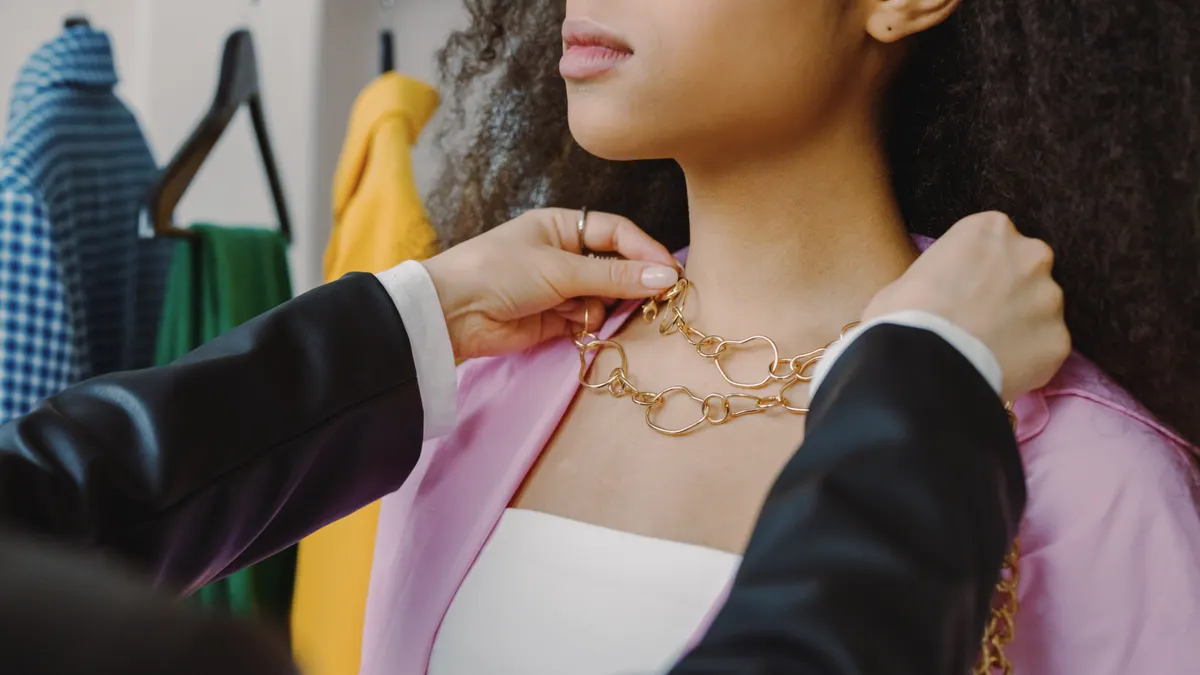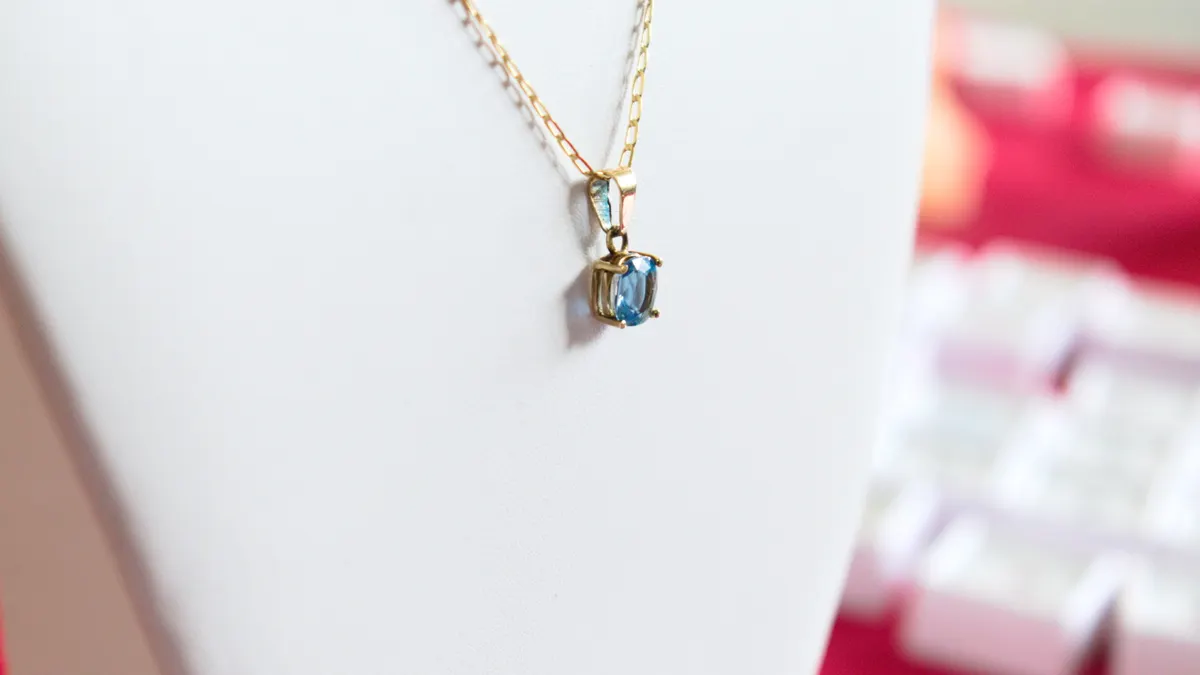
Last updated: November 05, 2026
Key Takeaways
- 18 inches is the usual starting point for a pendant necklace, but fit and neckline still matter.
- Pendant placement changes the look on your chest more than the chain alone.
- The neckline should guide the chain length so the pendant sits naturally with the outfit.
- Choker, princess, and matinee lengths are the most useful reference points for pendant chains.
Eighteen inches is the usual starting point for a pendant necklace. That length normally lands near the collarbone and gives the piece a clean everyday balance. But the better answer changes with where you want the pendant to sit, the neckline you are wearing, and whether the necklace should be a focal point or a quiet accent.
A pendant necklace is not just a chain with a charm on it. The chain length controls the pendant drop, which affects how visible the pendant is, how it moves, and whether it competes with a neckline or sits neatly below it. Too short, and the pendant can crowd the throat. Too long, and it can vanish into fabric or hang lower than you meant. The sweet spot is usually 16 to 20 inches for most daily wear, with 18 inches doing the most work.
Want a simple rule? Start at the collarbone and move one step at a time: 16 inches for a higher, tighter look; 18 inches for the classic pendant position; 20 to 24 inches when you want the pendant lower on the chest. If you are unsure, buy or choose an extender so the necklace can shift by 2 inches without changing the whole piece.
The pendant length that works for most people
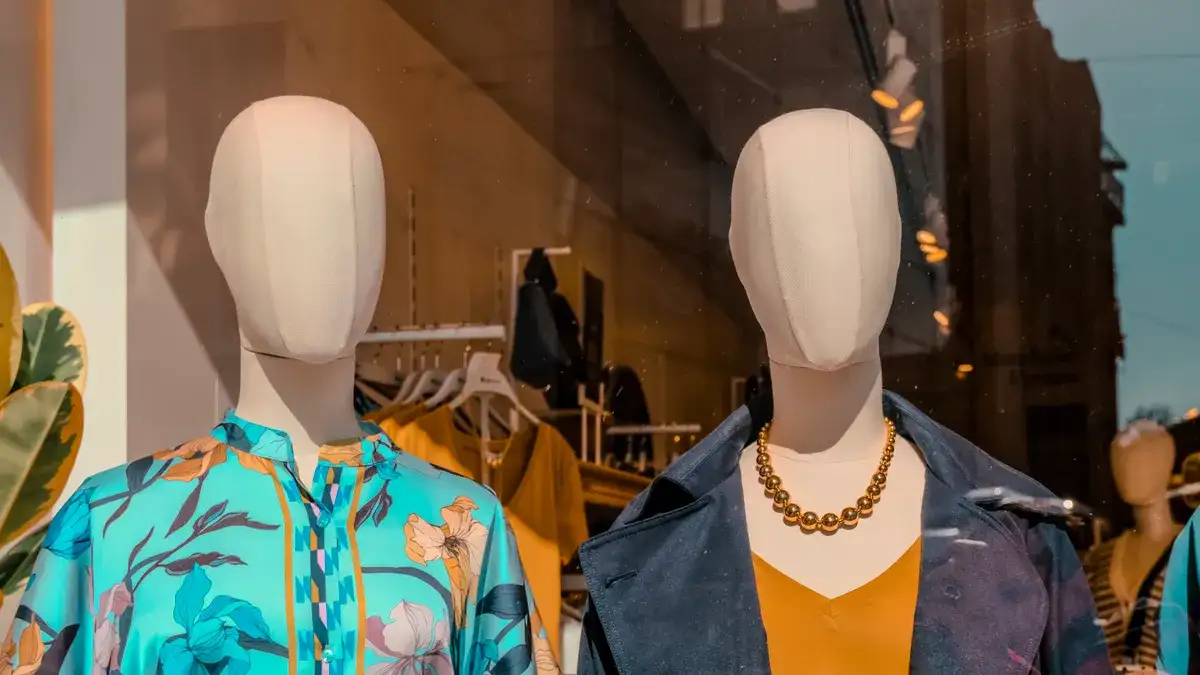
For many people, the best fit is a princess-length chain around 18 inches. It is a forgiving starting point because it usually lands the pendant just below the base of the neck and near the collarbone, which suits a wide range of tops and face shapes.
Why does 18 inches get recommended so often? Visual balance. A pendant needs room to hang clearly; it should not sit so high that it looks pinned to the throat, and it should not drop so low that it gets lost. On many necklines, 18 inches keeps the pendant visible without making the necklace feel oversized.
Still, “best” is not the same as “best for everyone.” A shorter neck can make 16 inches look crowded, while a longer neck can make 18 inches feel very centered. If the pendant itself is substantial, even 18 inches can feel lower because the weight pulls the drop down slightly. And if the pendant is tiny, 18 inches may still read as understated rather than bold.
A useful way to think about it is by placement:
- 16 inches: sits higher, closer to the base of the neck; useful for a neat, more fitted look.
- 18 inches: sits around the collarbone; the most common starting point for a pendant necklace.
- 20 to 24 inches: falls lower on the chest; better when the pendant is meant to stand out.
If you want one length that works across a wide range of outfits, 18 inches is often the best place to begin. Want the pendant to feel a little more relaxed, or to sit under a crew neck? 20 inches may serve you better. Need it to stay visible with a V-neck or scoop neck? Eighteen inches is a strong default, not a universal rule.
How pendant placement changes the look on your chest
Pendant placement changes the look on your chest by shifting the necklace’s visual center. That shift matters more than the chain itself. A pendant that rests at the collarbone reads as light and polished; a pendant that drops 2 to 4 inches lower reads as more deliberate and more noticeable.
High placement frames the face and feels tidy. That is why 16 to 18 inches often works well with simple shirts, button-downs, and open necklines. The pendant stays in the upper field of vision and does not compete with the clothing. For smaller pendants, initials, birthstones, and flat shapes, that visibility matters a lot.
Lower placement changes the mood. Around the center of the chest, the necklace starts to act like a vertical line, which can lengthen the torso visually. That is one reason matinee lengths, roughly 20 to 24 inches, can look elegant with deeper necklines or more substantial pendants. The trade-off? The pendant may swing more, rest against fabric, or move out of view when you sit.
Motion changes things, too. A shorter chain keeps the pendant steadier and closer to the body. A longer one gives it more swing, which can look attractive but can also make the pendant flip or turn. If the pendant has a front and back, or a design meant to face forward, too much drop can work against it.
So the real question is simple: do you want the pendant to sit like a small focal point near the collarbone, or do you want it to hang as a longer vertical line? That choice determines the chain length more reliably than any style rule.
Which chain length suits each neckline?

The right chain length depends on the neckline because the pendant should sit with the clothing, not fight it. A 2-inch change can mean the difference between a pendant that looks intentional and one that lands awkwardly against fabric.
Here is the practical guide:
- Crew neck or high neckline: 20 to 24 inches usually works better than 16 or 18 inches, because the pendant needs to fall below the fabric line.
- V-neck: 16 to 20 inches is often the most flattering range, since the pendant can echo the V shape without dropping too low.
- Scoop neck: 18 inches is a strong default because it sits in the open space above the neckline.
- Button-down shirt: 16 to 18 inches works if the top buttons are open; 20 inches is better if the pendant needs to clear the collar.
- Off-the-shoulder or wide neckline: 16 to 18 inches usually looks clean because the necklace stays near the collarbone.
The common mistake is picking a chain only by pendant length and ignoring the shirt or dress it will wear with. A pendant that looks perfect on bare skin can disappear under a sweater. A chain that looks elegant with a deep neckline can look too long with a crew neck. Bit of a trap, honestly.
This is where a small adjustment matters. An extender of 2 inches can move a necklace from collarbone length to just below it, which can rescue a piece that sits too high with one top and too low with another. If you wear different necklines often, that flexibility matters more than chasing a single “perfect” size.
The cleaner the neckline, the more the pendant reads. The busier the neckline, the more likely you want a shorter or longer chain that clears the fabric completely. That is why there is no universal best length without the outfit in view.
Choker, princess, and matinee lengths explained
Choker, princess, and matinee lengths are the three most useful reference points for choosing pendant necklace chain length. They map the necklace to the body in a way that is easier to use than guessing from inches alone.
A choker length sits around 14 to 16 inches. For a pendant necklace, this creates a high placement that can look crisp, but it is not ideal for every pendant. A pendant at choker length sits close to the throat, so it can feel compressed if the pendant is large or heavy. This length is best for small, light pendants and for looks that are meant to read as close-fitting.
A princess length sits around 18 inches. This is the classic pendant length for everyday wear because it lands near the collarbone on many people. It gives the pendant room to show without pushing it into a lower neckline. If someone asks for one chain length that works well for a pendant necklace, this is usually the first answer.
A matinee length sits around 20 to 24 inches. Use it when the pendant needs to fall lower on the chest, either to clear clothing or to create a more elongated look. It works well with higher necklines and with pendants meant to be noticed from a bit farther away. The drawback is that it can start to feel dressier or more deliberate, and it is less likely to disappear neatly under a shirt collar.
This is not about trend; it is about placement. Want the pendant close and neat? Go shorter. Want it to hover in open space? Stay around 18 inches. Want it to land lower and more visibly? Move into matinee territory.
A simple way to choose the right chain length
The simplest way to choose the right chain length is to decide where you want the pendant to land, then measure from the base of the neck to that point. That gives you a real placement goal instead of a guess.
- Stand in front of a mirror and place a tape measure at the base of your neck.
- Decide where you want the pendant to sit: at the collarbone, just below it, or near the center of the chest.
- Add the chain length that reaches that point: about 16 inches for high placement, 18 inches for collarbone placement, and 20 to 24 inches for lower placement.
- Check the neckline of the top you wear most often and make sure the pendant will clear the fabric by at least a small visible margin.
- Choose an extender if you want one necklace to cover more than one neckline, especially when moving between 18 and 20 inches.
Think about pendant drop, too. The pendant itself adds visible length, so a 1-inch pendant on an 18-inch chain will hang lower than a flat charm on the same chain. That matters when the pendant has a loop, a bail, or a vertical shape. Chain length and pendant drop work together.
Buying for a gift? Eighteen inches remains a practical default because it is the standard pendant length for many people. Choosing for yourself? Match the chain to the most common neckline in your closet. That gives you a necklace you will actually wear, not just one that looks right on paper.
When a shorter or longer chain is the better choice
Shorter is better when you want the pendant high, visible, and close to the body. Longer is better when you need the pendant to clear clothing or create a lower, more vertical line.
Choose a shorter chain, around 16 inches, if:
- you wear open necklines often,
- the pendant is small or delicate,
- you want a neat, centered look near the collarbone.
Choose a longer chain, around 20 to 24 inches, if:
- you wear crew necks or high necks,
- the pendant is meant to be seen over fabric,
- you want the necklace to elongate the chest line.
Shorter chains have a comfort trade-off. They can feel snug on a fuller neck, and they leave less room for adjustment. Longer chains bring a different trade-off: they can swing more, catch on clothing, or sit lower than intended. A long chain can also make a small pendant look underpowered unless the design is meant for that scale.
One honest limitation: if the pendant is very large, very heavy, or has an unusual shape, chain length alone will not solve the visual balance. The necklace may still pull forward or sit differently because of the pendant’s weight and profile. In that case, a slightly sturdier chain and a length in the 18 to 20 inch range often keeps the piece more stable.
For readers who want a broader definition of the piece itself, the hub on [what is a pendant necklace] can help, but this page stays with the placement question: where should the pendant sit, and which length gets it there?
The best answer, depending on who you are buying for
Eighteen inches is the best chain length for a pendant necklace for most adults, but that answer changes if the person wears high necklines, wants a lower pendant drop, or prefers a tighter fit. A single number only works as a practical starting point.
For daily wear, and when you do not know the recipient’s preferences, 18 inches is the most dependable default. It usually gives a clean pendant placement at the collarbone and works with many tops. For someone who wears sweaters, turtlenecks, or higher necklines, 20 inches can be the better choice because it lets the pendant clear fabric. If the pendant is tiny and meant to sit close like a subtle accent, 16 inches may be the stronger fit.
An extender is the easiest way to avoid being wrong by a small margin. A 2-inch extender can turn a necklace that sits too high into one that lands exactly where you want it. That is especially useful if the pendant is a gift or if the same necklace needs to work with both open and closed necklines.
Do not choose length by habit alone. A chain that looks good on a display bust can sit differently on an actual body, and a necklace that feels perfect with one shirt can look off with another. The right answer is the one that puts the pendant where you want the eye to go.
What is the most common chain length for a pendant?
The most common chain length for a pendant is 18 inches. It sits near the collarbone on many people and gives the pendant a clear, balanced position without hanging too low. That makes it the safest starting point for everyday wear and for gifts when you do not know the wearer’s exact preference.
How long should a necklace be for a pendant?
A necklace for a pendant should usually be 16 to 20 inches, with 18 inches as the most versatile choice. Shorter lengths keep the pendant higher on the chest, while longer lengths let it clear clothing and sit lower. The right answer depends on the neckline and how visible you want the pendant to be.
Can you shorten a pendant chain?
Yes, a pendant chain can often be shortened, but the method depends on the necklace construction. Some chains can be adjusted with extra jump rings or an extender removed; others need a jeweler to alter the length cleanly. If the chain is delicate or the clasp placement matters, professional shortening is usually best.
Drafted with AI; not yet reviewed by a person.